
Best Binoculars For People Who Wear Glasses – 2026 Reviews

Anyone who wears glasses knows the small indignity of borrowing binoculars at a ballgame or overlook: you press the eyepieces to your frames, lose half the view, and spend the next minute readjusting. The problem isn’t your eyes. It’s the mismatch between a binocular’s eyepiece design and the extra distance your glasses create.
The fix starts with two specs: eye relief and eyecup design. Eye relief is the room between the lens and your eye; eyecups control how close you can get without blackout or pressure. Magnification, objective lens size, weather sealing, and weight all matter too, but they matter after fit.
We compared binoculars across major brands to find the ones that genuinely work with glasses, from budget compacts to full-size outdoor models and a high-power zoom. The goal is simple: help you pick a binocular you can actually use without taking your glasses off.
Best Binoculars for People Who Wear Glasses – 2026 Reviews

Crossfire HD 10×42 – Glasses-Friendly Clarity and Lifetime Support
The Crossfire HD pairs a 10×42 roof-prism build with twist-up eyecups that adjust for glasses or bare eyes. HD glass and fully multi-coated lenses aim for sharp color and edge clarity, while the rubber-armored body stays secure in wet conditions. A tripod mount and included GlassPak harness round out a field-ready package.
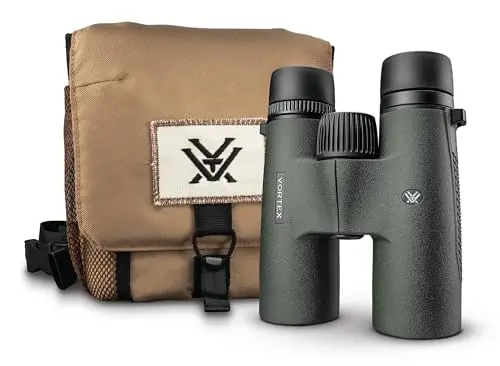
Triumph HD 10×42 – Full-Size Comfort with Lifetime Warranty
A full-size 10×42 with an HD optical system, the Triumph HD uses adjustable rubber eyecups and a 17mm eye relief figure that gives glasses wearers room to settle in. The polycarbonate chassis is rubber-armored, nitrogen purged, and tripod adaptable. Vortex includes a neck strap and GlassPak harness.

12×25 Compact – Budget Glasses-Friendly Pick
Occer’s 12×25 compact is built around eyeglass-friendly viewing: the rubber eyecups pull down, eye relief is listed at 20mm, and the 15mm eyepieces add room. BAK4 prisms and FMC coatings aim for clear images in a pocket-size body. It’s a natural pick for travel, birding, and occasional use.

H2O Xtreme 10×42 – Rugged Waterproof All-Rounder
Bushnell’s H2O Xtreme upgrades the H2O formula with BaK-4 prisms, fully multi-coated optics, and a 17mm eye relief figure. The O-ring-sealed, nitrogen-purged body is rated IPX7 and wrapped in rubber armor. It’s a rugged 10×42 for wet, dusty, or unpredictable outdoor use.

12×42 – Travel-Ready with Phone Adapter
The Adasion 12×42 combines twist-up eyecups with a listed eye relief range of 13.6mm to 19.6mm, so glasses wearers can dial in a workable position. BAK4 prisms and FMC lenses target bright, color-accurate views. A phone adapter, tripod, and crossbody case make it a travel-focused package.

H2O 10×42 – Dependable Waterproof Value
The H2O 10×42 is a straightforward waterproof roof-prism binocular with twist-up eyecups and a 15.6mm eye relief figure. Fully multi-coated optics and BaK-4 prisms support clear views, while nitrogen purging and O-ring seals handle wet weather. It’s a dependable choice for boating, hiking, and general outdoor use.

12×25 Pocket – Ultra-Compact Backup
POLDR’s 12×25 pocket binocular is tiny enough to keep in a pack or glovebox, yet it lists 16mm eye relief and a BAK4 prism. The center-focus knob and right-eye diopter are simple to adjust. It’s best treated as a compact backup for concerts, travel, and quick looks.

10-30×50 Zoom – High-Power Glasses-Friendly Scope
The Sogries 10-30×50 zoom binocular brings high magnification and a large 50mm objective into the glasses conversation with 22mm eye relief and adjustable eyecups. BAK4 prisms and FMC coatings aim for bright, high-contrast images. The metal-barrel build is heavy, so a tripod is the sensible setup.
How We Evaluated These Binoculars for People Who Wear Glasses
We didn’t spend a season glassing in the field or measure optical resolution in a lab. What we did: cross-referenced 8 binocular models from 6 distinct brands across 6 decision axes – eye relief, eyecup design, optical quality, weather sealing, weight and ergonomics, and included accessories. We triangulated published specifications, feature sets, owner feedback where available, and use-case fit for glasses wearers. We also audited the small details that matter when frames are in play: listed eye relief numbers, whether eyecups twist, fold, or pull down, and how much room the eyepiece leaves for a glasses temple. The lineup spans compact, full-size, travel-ready, and high-power zoom formats, so the comparison stays practical rather than theoretical.
The scoring framework weighted real-world fit for glasses wearers (70%) – how comfortably each binocular accommodates spectacles while still delivering a usable view – against feature differentiation (30%) – optical upgrades, weatherproofing, accessories, and warranty support. We did not conduct long-term field testing, drop tests, or fogging trials; this assessment is built on published specifications, owner impressions where available, and how each design maps to glasses-wearing use. We have no commercial relationship with any featured brand; recommendations track fit and differentiation, not brand preference. If you want the most balanced glasses-friendly package, the Vortex Crossfire HD is the pick; if you need a budget-first backup, the Occer 12×25 makes more sense.
How to Choose the Right Binoculars for People Who Wear Glasses
1. Why Eye Relief Is the First Spec Glasses Wearers Should Check
Eye relief is the distance between the eyepiece and the point where you see the full field of view. Glasses add thickness between your eye and the lens, so a binocular with short eye relief forces you to mash the frames against your face or accept blackout and tunnel vision. For most glasses wearers, 15mm of eye relief is a workable floor; 17mm to 20mm is more comfortable, especially with thicker frames. If you want a safe default, the Vortex Crossfire HD is the pick because its twist-up eyecups and listed 15mm figure are a proven starting point for many frames.
2. Twist-Up vs. Fold-Down Eyecups: Which Works Better With Glasses?
Twist-up eyecups are usually the most adjustable: you can leave them down for glasses and raise them for bare eyes. Fold-down or pull-down rubber eyecups are simpler and common on compact budget models, but they can wear over time and offer less fine-tuning. Adjustable eyecups are not a substitute for eye relief, so check both numbers. If you want a compact glasses-friendly option, the Occer 12×25 is the pick because its pull-down eyecups and 20mm eye relief are designed around spectacles.
3. How Magnification and Objective Lens Size Affect Glasses-Friendly Binoculars
10×42 binoculars are the classic all-around format: enough magnification for birds and wildlife, with a 42mm objective that keeps the image bright. 12×42 adds reach but also more hand shake, while 12×25 compacts trade low-light brightness for pocketability. For glasses wearers, the eyepiece design matters as much as the numbers. A large eyepiece can make eye placement easier, but it does not fix short eye relief by itself.
4. Waterproofing, Fogproofing, and Field Durability
Nitrogen purging and O-ring seals are the specs behind fogproof and waterproof claims. If you birdwatch near water, boat, or hike in humid weather, an IPX7 rating adds meaningful insurance against splashes and accidental dunks. Rubber armor protects the housing and gives wet hands a better grip. These features don’t directly improve glasses fit, but they determine whether a binocular survives real outdoor use.
5. Weight, Ergonomics, and Long-Day Comfort for Glasses Wearers
A full-size 10×42 can weigh around 1.2 to 1.5 pounds, while a compact 12×25 may be less than half that. Center-focus wheels and right-eye diopters should be easy to reach without shifting the binocular away from your glasses. Tripod adaptability helps with high-power models or long viewing sessions, but it adds setup. If you plan to carry a binocular all day, prioritize lightweight construction and a secure strap or harness.
6. Budget vs. Premium: What Changes in Glasses-Friendly Binoculars
At the budget-friendly end, you can expect workable eye relief, simple eyecups, and basic weather sealing. The premium tier generally adds better glass, smoother focus, more refined eyecups, and stronger warranties. For glasses wearers, the sweet spot is often a mid-range model with 17mm or more eye relief and twist-up eyecups. If you want a travel kit with a phone adapter, the Adasion 12×42 is the pick; if you want a rugged all-rounder, the Bushnell H2O Xtreme is the safer match.
Frequently Asked Questions
1. What eye relief do you need for binoculars if you wear glasses?
For most glasses wearers, 15mm of eye relief is the practical minimum, and 17mm to 20mm is more comfortable. Thick frames and prescription lenses can eat up extra room, so try to leave a margin. Twist-up eyecups help because you can leave them down for glasses and raise them for bare eyes. A compact like the Occer 12×25 lists 20mm eye relief, while full-size models often sit closer to 15mm to 17mm.
2. Do twist-up eyecups work better than fold-down eyecups for glasses?
Twist-up eyecups usually offer more precise adjustment, especially if you share the binocular with someone who does not wear glasses. Fold-down or pull-down eyecups are common on compact models and can work well, but they may wear out sooner and provide fewer positions. The bigger factor is eye relief: a twist-up eyecup cannot rescue a binocular with very short relief. Look for both adjustable eyecups and a listed relief figure that matches your frames.
3. Vortex Crossfire HD vs. Bushnell H2O Xtreme: Which is better for eyeglass wearers?
The Vortex Crossfire HD has a slight edge for glasses wearers because its twist-up eyecups and 15mm eye relief are paired with a strong lifetime warranty and a complete harness. The Bushnell H2O Xtreme counters with a rugged IPX7 waterproof build and 17mm eye relief, which may suit thicker frames or wetter conditions. If you want the most balanced all-round package, the Crossfire HD is the pick; if rough-water durability is the priority, the H2O Xtreme is the better route.
4. Occer 12×25 vs. POLDR 12×25: Which compact binoculars suit glasses wearers?
The Occer 12×25 is the clearer glasses-first compact because it lists 20mm eye relief and pull-down eyecups designed to fit over frames. The POLDR 12×25 lists 16mm eye relief and a lighter body, so it can work for casual use but offers less margin for thick glasses. If compact size is the priority and you want the more accommodating eyepiece, the Occer 12×25 is the pick. The POLDR remains a handy backup for concerts and travel.
5. Can high-power binoculars like the Sogries 10-30×50 work with glasses?
Yes, but high-power models demand more care. The Sogries 10-30×50 lists 22mm eye relief and adjustable eyecups, so there is enough room for many glasses frames. The catch is weight and shake: a 50mm zoom binocular is heavy and best used from a tripod. If you mostly view from a fixed position, it can work; if you hike or birdwatch on the move, a lighter 10×42 is more practical.
Final Verdict
For most glasses wearers, the Vortex Crossfire HD is the answer – it pairs twist-up eyecups and workable eye relief with HD glass, weather sealing, and a lifetime warranty. If you need a budget-first backup, the Occer 12×25 delivers genuine glasses-friendly eyecups at the entry tier. For travel with phone-scoping built in, the Adasion 12×42 is the practical pick, and if you want high-power zoom from a fixed position, the Sogries 10-30×50 fills that niche. The right choice hinges on frame thickness, viewing distance, and whether you prioritize portability or low-light brightness. Start with fit, then choose the format that matches how you actually glass.
