
Best Sunscreens For Eczema On Face – 2026 Reviews

A flare-up on your face makes sunscreen feel like a high-stakes decision. The wrong formula can sting, pill under moisturizer, or leave a chalky film; the right one feels like part of your barrier routine. For eczema on face, the bar is not just SPF-it is how calmly the formula sits on reactive skin day after day.
The biggest split is between mineral and chemical filters, but that is not the whole story. Look for fragrance-free formulas, non-comedogenic labels, and barrier-supporting ingredients like ceramides, niacinamide, or glycerin. Texture matters too: a moisturizing cream can suit dry, flaky patches, while a matte or oil-absorbing lotion may be better if your eczema sits alongside oiliness.
We compared options across brands with different priorities-barrier repair, invisible mineral finish, high-UV protection, and lightweight wear under makeup. The goal is to match your skin’s current mood, not chase a single universal winner.
Best Sunscreens for Eczema on Face – 2026 Reviews

Facial Moisturizer SPF 30 – Mineral Barrier Care for Sensitive Skin
A mineral SPF 30 moisturizer built for sensitive skin, with zinc oxide and ceramides and without many common irritants.

Toleriane Double Repair UV SPF 30 – Barrier-Repairing Daily Moisturizer
A fragrance-free daily moisturizer with SPF 30, ceramide-3, niacinamide, and glycerin for sensitive, barrier-compromised skin.
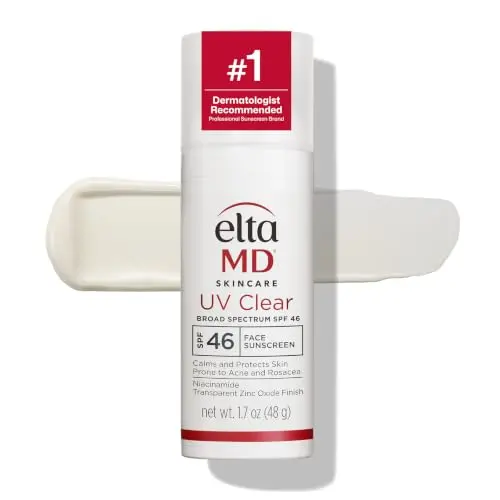
UV Clear SPF 46 – Calming Face Protection for Reactive Skin
A lightweight, oil-free SPF 46 face sunscreen with transparent zinc oxide and niacinamide for sensitive, acne-prone, and rosacea-prone skin.

Invisible Mineral Sunscreen SPF 50 – Clear Finish for Sensitive Skin
A 100% mineral SPF 50 face sunscreen with zinc oxide, ceramides, niacinamide, and vitamin E, formulated for an invisible finish on sensitive skin.

Anthelios Melt-In Milk SPF 100 – High-Protection Face and Body Sunscreen
A high-protection SPF 100 face and body sunscreen with a fast-absorbing milk texture, antioxidants, and water resistance for sun-sensitive skin.

Sun Age Defense SPF 50 – Hydrating Face Protection with Hyaluronic Acid
A fragrance-free SPF 50 face lotion with hyaluronic acid and five antioxidants for dry, sensitive skin that wants anti-aging hydration.

Clear Skin Face Sunscreen SPF 50 – Matte Protection for Oily, Acne-Prone Skin
A matte-finish SPF 50 face sunscreen with oil-absorbing minerals and five antioxidants for oily, acne-prone skin.

AM Facial Moisturizer SPF 50 – Ceramide-Rich Daily Sunscreen
A hydrating SPF 50 facial moisturizer with zinc oxide, hyaluronic acid, niacinamide, and three ceramides for daily barrier support.
How We Evaluated These Sunscreens for Eczema on Face
We didn’t run controlled facial-tolerance trials or measure transepidermal water loss. What we did: cross-referenced 8 facial sunscreen formulas from 5 brands across 6 decision axes-filter type, barrier-support ingredients, finish and white cast, eye-area comfort, daily wearability, and high-exposure protection. We triangulated published ingredient lists and specifications, owner feedback where available, and use-case fit for eczema on face. We also mapped how each formula behaves under makeup, around dry patches, and on oily or combination skin. For very dry patches, we looked for ceramides, glycerin, or hyaluronic acid; for oily zones, we checked non-comedogenic and oil-absorbing language.
The scoring framework weighted real-world fit for eczema on face (70%)-how calmly and reliably each option protects reactive facial skin-against feature differentiation (30%)-standout barrier ingredients, invisible finishes, water resistance, and texture. We have no commercial relationship with any brand here; recommendations track fit and differentiation, not brand preference. If you want the most minimal-irritant starting point, the Vanicream Facial Moisturizer SPF 30 is the clear first look. If barrier moisture matters more, the Toleriane Double Repair UV SPF 30 is the better match.
We did not conduct dermatologist-supervised patch testing or long-term flare monitoring, so treat the eczema-specific guidance as a research-backed starting point, not a clinical recommendation. Patch testing any new facial sunscreen is still the smartest first move.
How to Choose the Right Sunscreens for Eczema on Face
1. What Eczema on Face Changes About Sunscreen Choice
When eczema shows up on your face, the sunscreen decision shifts from the highest SPF to the formula your skin will tolerate daily. The first filters are fragrance-free and essential-oil-free formulas, since added scent and botanical oils are common triggers for reactive skin. You also want non-comedogenic labeling if you’re prone to clogged pores, and barrier-supporting ingredients like ceramides, glycerin, or niacinamide are a meaningful bonus.
Texture is part of tolerance, too. A creamier formula can cushion dry, flaky patches, while a lightweight lotion or matte fluid may be easier on oily zones. The goal is a sunscreen you’ll actually reapply, not one that feels so heavy you avoid it by noon.
2. Mineral vs. Chemical Filters for Eczema-Prone Skin
Mineral sunscreens rely on zinc oxide or titanium dioxide to sit on top of skin and deflect UV rays. They’re often gentler on reactive skin, but older formulas can be thick or chalky. Chemical filters feel lighter and more invisible, yet some eczema-prone faces find them more likely to sting, especially around the eyes.
There’s no universal winner. If your skin flares from richer textures or you want the most straightforward filter story, start mineral. If you need high protection with a weightless feel and your skin has tolerated chemical filters before, a well-formulated chemical option can work. Patch test any new face sunscreen on a small area first; if you want a mineral pick with a much lower white-cast risk, the CeraVe Invisible Mineral Sunscreen is the one to shortlist.
3. Barrier Ingredients That Make Sense for Eczema on Face
Barrier ingredients don’t replace prescription eczema care, but they can make daily sun protection feel less drying. Ceramides help support the skin’s lipid barrier, niacinamide can help calm the look of skin and uneven tone, and glycerin or hyaluronic acid pull in hydration. If your face feels tight after cleansing, a moisturizing SPF is often easier to stick with than a bare-bones fluid.
The Toleriane Double Repair UV SPF 30 is a strong example: it combines ceramide-3, niacinamide, and glycerin in a fragrance-free formula. That doesn’t guarantee zero irritation, but it stacks the odds in favor of tolerance.
4. White Cast, Pilling, and Makeup-Friendly Finishes
White cast is the most common complaint about mineral face sunscreens, and it’s especially noticeable on deeper skin tones. Look for language like invisible finish, transparent zinc oxide, or Miner-ALL technology if you want mineral protection without a chalky look. Pilling is another issue: apply sunscreen as the last step and give each layer time to absorb.
If you wear makeup, a makeup-friendly finish matters as much as SPF. Lightweight formulas tend to layer better than rich creams, though dry eczema patches may still need a moisturizer underneath. The EltaMD UV Clear SPF 46 is a good reference point for a lightweight, oil-free finish that sits well under makeup for many wearers.
5. How to Choose SPF for Daily Wear vs. Outdoor Days
For everyday commutes and time by a window, SPF 30 is a realistic baseline if you apply enough and reapply when you’re outside. SPF 50 gives more headroom for errands, lunch walks, and long days indoors with bright windows. For hiking, beach days, or high-altitude sun, a dedicated SPF 100 formula with water resistance makes more sense than layering a daily moisturizer repeatedly.
Reapplication is where most routines fall apart. A pump bottle or travel-friendly tube helps, and a formula that doesn’t pill under makeup is more likely to get used. If your skin is actively flaring, keep the routine simple: gentle cleanser, prescribed treatment, barrier moisturizer, then sunscreen.
6. Vanicream vs. La Roche-Posay Toleriane: Which Fits Eczema on Face?
These two are the most direct cross-brand comparison for a reactive face. Vanicream Facial Moisturizer SPF 30 is the minimal-irritant route: zinc oxide, ceramides, no fragrance or common irritants, and the National Eczema Association Seal. Toleriane Double Repair UV SPF 30 is the hydration route: ceramide-3, niacinamide, glycerin, and a lightweight moisturizer texture.
Choose Vanicream if your skin reacts to botanicals, dyes, or essential oils and you want the shortest ingredient story. Choose Toleriane if your eczema-prone face feels dry and tight and you want SPF that behaves like a barrier cream. Neither is a treatment for eczema, and both still warrant a patch test. If you’re unsure, start with the Vanicream Facial Moisturizer SPF 30 because its irritant-avoidance list is the more conservative first step.
Frequently Asked Questions
1. Is mineral sunscreen better than chemical sunscreen for eczema on face?
Not automatically. Mineral filters like zinc oxide and titanium dioxide are often better tolerated because they sit on top of skin and have a simpler filter story. But chemical filters can be lighter and more invisible, and some eczema-prone faces do fine with them. The bigger predictors are fragrance-free labeling, non-comedogenic status, and whether the formula stings your eyes or pills under moisturizer. Patch test either type.
2. What's the difference between Vanicream Facial Moisturizer SPF 30 and La Roche-Posay Toleriane Double Repair UV SPF 30?
Vanicream is the minimal-irritant mineral pick: zinc oxide, ceramides, and no fragrance, dyes, lanolin, parabens, formaldehyde releasers, botanical extracts, or essential oils. It carries the National Eczema Association Seal. Toleriane is the hydration-first pick: ceramide-3, niacinamide, glycerin, and a lightweight moisturizer texture, but it uses a broader formula and some sensitive skin types still break out. If your skin reacts to many ingredients, the Vanicream Facial Moisturizer SPF 30 is the safer starting point. If tightness and dryness dominate, Toleriane may feel more comfortable.
3. EltaMD UV Clear vs. CeraVe Invisible Mineral Sunscreen: which is better for reactive skin?
They solve different problems. EltaMD UV Clear is oil-free, non-comedogenic, and built around transparent zinc oxide plus niacinamide, so it’s the stronger fit when eczema overlaps with acne, rosacea, or post-blemish marks. CeraVe Invisible Mineral is a 100% mineral SPF 50 with ceramides and a Miner-ALL invisible-finish technology, which makes it the better choice if white cast is your main dealbreaker. Both are fragrance-free, but neither is guaranteed non-irritating. If you want the lighter makeup-friendly texture, the EltaMD UV Clear SPF 46 is the pick; if you want mineral protection with a clearer finish, choose CeraVe.
4. Can sunscreen for eczema on face be worn under makeup?
Yes, but texture matters. Look for lightweight, non-greasy formulas and give them a minute to set before foundation. A mineral primer finish can help, while heavy creams may pill. If your skin is actively flaring, skip makeup if you can and keep the sunscreen layer simple. Reapply with a stick or mist if rubbing in a cream irritates the skin.
5. How often should I reapply facial sunscreen if I have eczema?
Reapply every two hours during sun exposure, and sooner after swimming or heavy sweating. For eczema on face, the practical barrier is often texture: a lightweight lotion or mineral stick is easier to reapply than a rich cream. If your skin is irritated, don’t scrub or rub aggressively; press the product on gently. A fragrance-free formula you can tolerate is better than a high-SPF formula you avoid.
Final Verdict
For most people dealing with eczema on face, the Vanicream Facial Moisturizer SPF 30 is the safest first buy. It keeps the filter story simple, skips a long list of common irritants, and adds ceramides instead of just sun protection. If your skin feels dry and tight, the Toleriane Double Repair UV SPF 30 is the more moisturizing daily choice. And if white cast is the reason you’ve avoided mineral sunscreen, the CeraVe Invisible Mineral Sunscreen SPF 50 is the pick to try first. For high-exposure outdoor days, step up to a dedicated high-SPF formula rather than layering a daily moisturizer repeatedly. Start with the most boring, fragrance-free option your skin tolerates, then optimize texture from there.
