
Best Water Shoes For Snorkeling – 2026 Reviews

The first step off a rocky beach into snorkeling water is where a lot of trips get uncomfortable. A pair of water shoes can turn that moment from a careful shuffle into a confident stride – but only if the sole grips, the upper drains, and the fit stays put once you’re in the water.
For snorkeling, the priority list is a little different from a pool shoe. You want underfoot protection for shell-strewn entries and slick rock, a sole that holds on wet surfaces, and drainage that clears water fast enough that the shoe doesn’t turn into a soggy anchor. A secure closure matters too, especially when surf or current is tugging at your feet.
We looked across brands at water shoes that make sense for snorkeling trips, from barefoot-style aqua socks to thicker-soled shore shoes. The goal is to help you match the shoe to the way you actually enter the water – sandy beach, rocky cove, or boat deck – rather than chase a single do-everything pick.
Best Water Shoes for Snorkeling – 2026 Reviews

SP001 – Protective Quick-Dry Water Shoe
The SP001 is built for shorelines where you need more than a sock. A thick rubber sole and toe cap shield feet from sharp shells and rock, while 3D non-slip treads aim to keep you upright on wet, uneven ground. Drainage holes in the outsole and insole help water clear quickly, and the elastic vamp slips on without a lace tie.
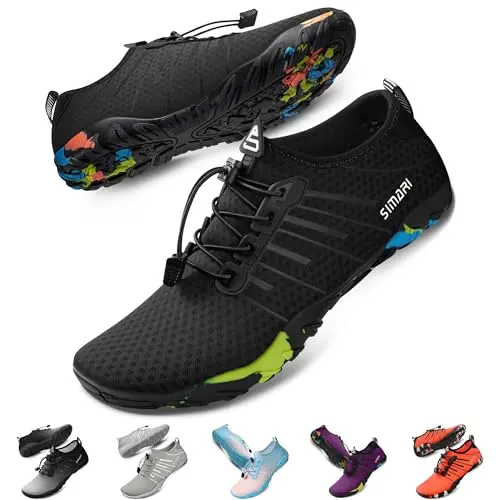
UK-WP001 – Quick-Dry Aqua Sock for Snorkeling
The UK-WP001 is a lightweight aqua sock with a natural rubber sole and deep treads for wet rocks, sand, and hot surfaces. A 360-degree drainage system moves water through the sole and insole, while the elastic lock laces let you tension the fit before stepping into current. It’s a versatile, travel-friendly option for snorkeling, beach walks, and water parks.

Versatile Water Shoes – Thick-Sole Sand Barrier
The WHITIN Versatile Water Shoes are built around a thickened TPR sole and a snug drawstring fit that aims to keep sand, pebbles, and grit out. The upper is soft and stretchable, the shoe folds down for travel, and a removable EVA insole helps speed drying. It’s a practical pick for sandy entries, kayaking, diving, and other water-to-land days.

Barefoot Water Shoes – Quick-Dry Mesh for Water Sports
The ziitop water shoe uses a stretch mesh upper and a rubber outsole with a traction pattern and drainage holes. Elastic lock laces adjust the fit quickly, and the elastic neckline makes it easy to pull on and off. It’s a lightweight, packable option for snorkeling, beach days, rafting, and pool time.

Composite – Barefoot Quick-Dry Water Shoe
The Racqua Composite is a barefoot-style water shoe with a wide toe box, zero heel lift, and a low-profile grip outsole. Drainage holes in the bottom help water flow out without letting sand or rocks in, and the flexible build packs down easily. It’s aimed at snorkeling, river hiking, kayaking, and other water-to-land use.

SK001 – Barefoot Slip-On Aqua Sock
The SK001 is a simple, lightweight aqua sock with a soft spandex upper, a rubber outsole with a non-slip stripe, and a lace-free slip-on design. It’s built for pool, beach, river, and snorkeling use where you want minimal bulk and easy on-off. The smooth elastic neck helps prevent chafing and keeps the shoe from slipping off during activity.
How We Evaluated These Water Shoes for Snorkeling
We didn’t see these through a full season of snorkeling trips or run controlled wet-traction tests. What we did: cross-referenced 6 water shoe models from 5 distinct brands across 6 decision axes – underfoot protection, outsole traction, drainage and dry time, fit security, barefoot comfort, and packability. We triangulated published specifications, feature sets, owner feedback where available, and use-case fit for shore-entry snorkeling. We also pressure-tested the marketing language against the actual design details, because a water shoe can be described as non-slip and still have a flat, hard sole that feels sketchy on wet rock.
The scoring framework weighted real-world snorkeling fit (70%) – how well each shoe protects, drains, and stays put around water – against feature differentiation (30%) – the design choices that separate one model from another. That means a thicker sole earned credit only when the drainage and fit made sense too; a barefoot sock scored well when its flexibility and packability matched easy entries. We have no commercial relationship with the brands featured; recommendations track fit and differentiation, not brand preference. For most snorkelers, the SEEKWAY SP001 is the strongest all-around match, while the SIMARI UK-WP001 is the better call if adjustable fit security matters more than a thicker sole. We also weighed how each shoe behaves when wet, not just how it reads on paper, and we flagged the trade-offs that matter once sand, salt, and current enter the picture.
How to Choose the Right Water Shoes for Snorkeling
1. What Matters Most in Water Shoes for Snorkeling
For snorkeling, a water shoe has to solve a different problem than a pool slide. You’re often crossing wet rock, shell-strewn sand, or a boat deck before you ever get in the water, then wading back out with wet feet. The best pair balances underfoot protection with outsole traction and drainage, so the shoe doesn’t become a bucket.
Fit security matters just as much. A loose aqua sock can roll or slip in current, while a shoe with a drawstring or elastic lock laces stays put. Look for a snug heel and a close-fitting upper before you worry about style.
2. Sole Protection and Traction for Snorkeling Shorelines
A thick rubber sole or TPR sole is worth the extra bulk if your entry involves jagged rock, coral rubble, or hot sand. Deep treads help on wet, sloping surfaces, but tread depth alone isn’t enough; the rubber needs to feel sticky rather than hard. A toe cap adds another layer of protection when you’re shuffling through shallows.
If your typical entry is a sandy beach and you mainly want to keep grit out, the WHITIN Versatile Water Shoes are the pick here because the drawstring and thick sole are built around that exact scenario. For rocky entries, prioritize a shoe with more structure underfoot.
3. Fit, Drainage, and Fin Compatibility
Drainage holes should be small enough to keep sand and pebbles out but open enough to let water exit. A removable insole makes rinsing and drying easier, especially after salt water. If you plan to wear the shoes under snorkeling fins, check that the heel is low-profile and the upper isn’t bulky; many water shoes are too thick for a fin pocket.
For a barefoot feel with a wide toe box, the Racqua Composite is the pick in this lineup. If you need more structure, size up only after checking the brand’s chart, since fit varies widely across water shoes.
4. Water Shoes vs. Snorkeling Booties: Which Do You Need?
A water shoe is the more versatile choice for beach entries, boat decks, and casual wading. A snorkeling bootie is usually designed to pair with fins, with a thinner sole and a fin-friendly heel. If you’re mainly snorkeling from a boat and wearing fins most of the time, booties may be the better fit.
If you’re doing a mix of shore entry, beach walking, and casual water time, water shoes give you more protection and traction on land. The trade-off is bulk: a structured water shoe may not slide into a fin pocket as easily.
5. Budget, Mid-Range, and Premium Water Shoes for Snorkeling
Entry-level water shoes are usually simple aqua socks with thin soles and basic drainage. They’re fine for sandy beaches, pool decks, and easy entries, but they won’t protect much on rough rock. Mid-range options add thicker soles, toe caps, and better closures, which is the sweet spot for most snorkelers.
Premium water shoes often focus on fit systems, more durable rubber, or specialized sand barriers. You don’t need to spend the most to get a good snorkeling shoe, but the jump from a thin sock to a structured sole is the one that matters most.
Frequently Asked Questions
1. Are water shoes or snorkeling booties better for snorkeling?
It depends on how you snorkel. If you’re mostly stepping off a boat and wearing fins, a snorkeling bootie is usually the cleaner match because it’s designed for a fin pocket. If you’re walking across rocky shorelines, sandy beaches, or boat decks, a water shoe gives you more underfoot protection and traction on land. Many snorkelers end up with both: a water shoe for shore days and a thin bootie for fin-heavy boat trips.
2. What's the difference between the SEEKWAY SP001 and SIMARI UK-WP001?
The SEEKWAY SP001 leans toward protection: a thick rubber sole, a toe cap, and 3D non-slip treads make it the better choice for rocky entries. The SIMARI UK-WP001 is lighter and more travel-friendly, with elastic lock laces that let you fine-tune fit security. For most snorkelers heading into rough shallows, the SEEKWAY SP001 is the safer pick; choose the SIMARI if you want a lighter shoe with adjustable tension.
3. How should water shoes fit for snorkeling?
They should feel snug without pinching, with no heel slip and a little room at the toes. A secure closure – drawstring, elastic lock laces, or a snug elastic neck – matters more in water than on land, because a loose shoe can roll in current. Try them on with the socks you’ll wear, or barefoot if that’s your plan. If you’re between sizes, check the brand’s chart rather than assuming consistency across water shoe brands.
4. What's the difference between the WHITIN Versatile Water Shoes and Racqua Composite?
The WHITIN Versatile Water Shoes are built for sandy entries, with a thick TPR sole, a snug drawstring, and a removable insole that helps keep grit out. The Racqua Composite is a barefoot-style shoe with a wide toe box and a low-profile sole, so it feels more flexible and packs smaller. Pick the WHITIN for sand and rock protection; pick the Racqua for a lighter, more natural feel on easy shorelines.
5. Can you wear water shoes with snorkeling fins?
Sometimes, but fin compatibility depends on the shoe’s bulk. A low-profile water shoe may fit into a large fin pocket, while a thick-soled shore shoe usually won’t. If you plan to wear fins most of the time, look for a snorkeling bootie or a very thin aqua sock instead. For shore entry and surface swimming, water shoes are the more practical choice.
Final Verdict
For most snorkelers, the SEEKWAY SP001 is the answer. It pairs real underfoot protection with drainage and a secure, easy-on fit, so it handles rocky entries and boat decks without feeling like a hiking boot in the water. If you want a lighter travel shoe with adjustable tension, the SIMARI UK-WP001 is a strong alternative. For sandy beach entries, the WHITIN Versatile Water Shoes keep grit out with a drawstring and thick sole, while the Racqua Composite is the barefoot-feel pick for easy shorelines. Match the shoe to your entry, and you’ll spend less time fussing with your feet and more time looking at fish.
